
Matrice 4T, 4TD, 5T or 5TD for Breeding Bird Protection? The Sensors Decide
Which thermal imaging drone suits breeding bird protection: thermal camera, zoom and laser compared, and only then the question of the dock.
Matrice 4T, 4TD, 5T or 5TD for Breeding Bird Protection? The Sensors Decide
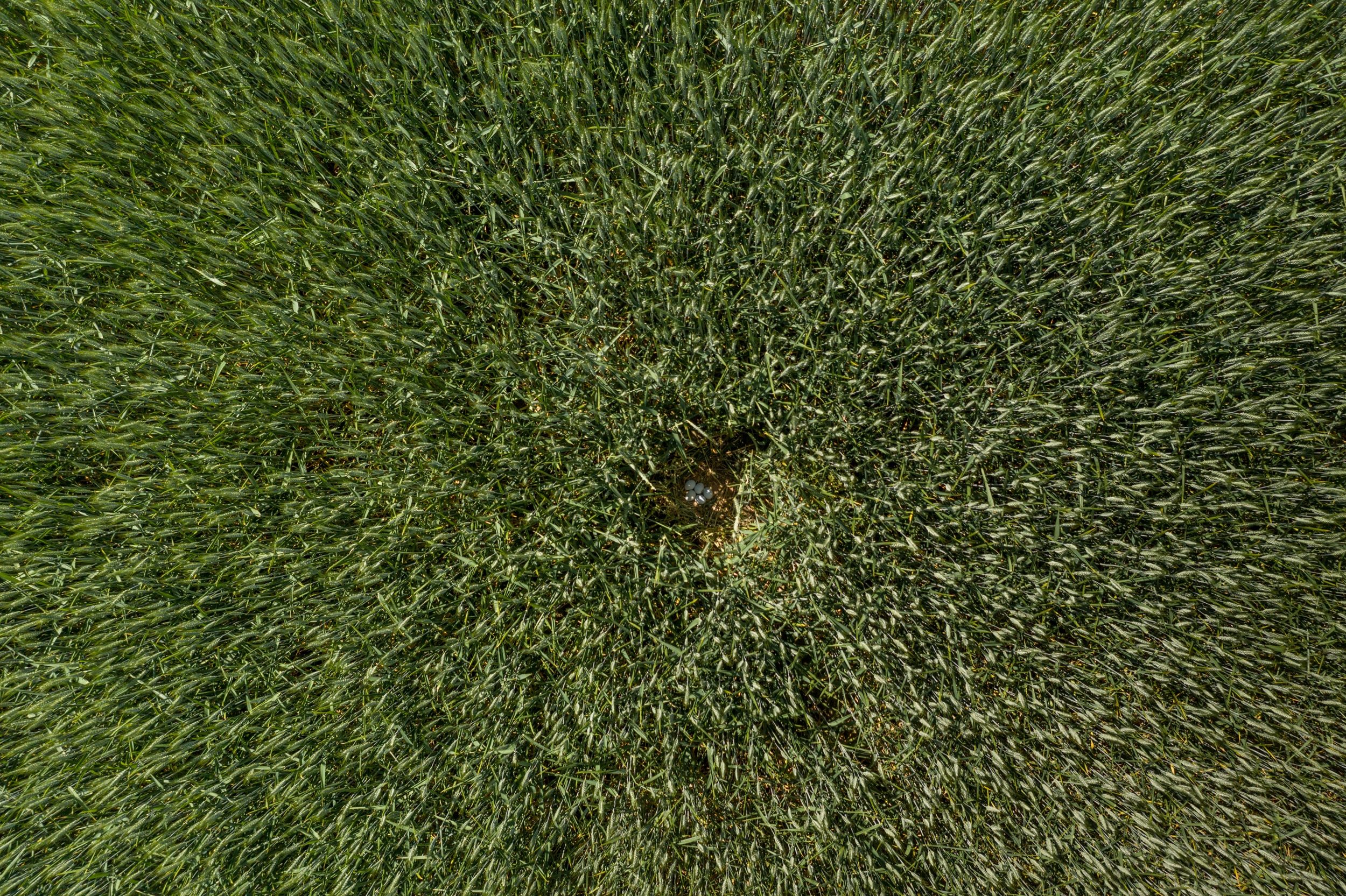
In breeding bird protection you search crops and meadows for nests or check eyries without disturbing the adult birds. Which thermal imaging drone suits that depends first on the sensors: thermal camera, zoom and laser. Whether you need a dock is the second question.
This article compares the DJI Matrice 4TD and 4T with the DJI Matrice 5T and 5TD by what their sensors do for breeding bird protection. For manual searching, the Matrice 4T, 4TD and 5T come into question. Dock 3 with the 4TD and Dock 4 with the 5TD are our outlook.
Short answer
Which sensors matter in breeding bird protection?
Do you search for nests in changing fields? Then the Matrice 4T or 4TD is enough in many cases: portable, quick to deploy at the field, thermal camera with 640 × 512 pixels.
Do you have small targets, large areas or early checks in frost? Then the Matrice 5T offers more, also for manual searching: twice as many thermal pixels in each direction, stronger zoom, longer laser range and more flight time. The 5TD has the same sensors and is the drone of the Dock 4.
You decide on the dock afterwards, see below.
Requirements
What breeding bird protection needs from a drone
- A brooding adult must stand out in the thermal image, even in a crop.
- Distance: you assess the nest from afar so the bird stays on the clutch.
- An exact nest location for the protective fence or the agreement with the farmer.
- Flights early in the morning or at dusk.
- Plenty of area per battery, because breeding grounds are large.
- A link to our POICloud to send the exact nest positions to your smartphone.
Thermal camera
Thermal resolution: spotting the adult bird on the nest
The 5T and 5TD have a thermal camera with 1280 × 1024 pixels, the 4T and 4TD one with 640 × 512. According to dealer information the field of view is the same, 45° diagonal. So you see the same area on the ground, but with twice as many pixels in each direction. In practice that means you can fly considerably higher and disturb less.
An adult bird on the nest is a small, warm target. The more pixels it covers in the image, the more reliably you tell it from a sun-warmed clod of earth. The calculation below is our own, derived from the manufacturer's data, not a DJI figure. It applies to a thermal image looking straight down and a target of about 40 cm, roughly the size of a brooding bird of prey.
Calculation example: thermal image looking straight down
| Flight height above ground | 40 m | 70 m | 100 m |
|---|---|---|---|
| Image width on the ground (both) | about 26 m | about 45 m | about 65 m |
| Pixel size Matrice 4T / 4TD | about 4 cm | about 7 cm | about 10 cm |
| Pixel size Matrice 5T / 5TD | about 2 cm | about 3.5 cm | about 5 cm |
| 40 cm target, 4T / 4TD | about 10 pixels | about 6 pixels | about 4 pixels |
| 40 cm target, 5T / 5TD | about 20 pixels | about 11 pixels | about 8 pixels |
For large targets and low altitude, 640 × 512 pixels are enough in many cases. The higher resolution gives you reserve when the target is small or when you have to fly higher to avoid disturbance. For sensitivity the manufacturer states the same values for both, so we cannot prove an advantage for the 5T / 5TD there. The difference in resolution is solid.
Both have one limit: if the adult is not sitting on the clutch, the eggs cool down and barely show up in the thermal image. Then the zoom camera helps, see the next section.
Pros and cons of high resolution
High thermal resolution is not all upside
The 5T and 5TD offer four times as many thermal pixels, twice as many in each direction. The big advantage is that you can make out more detail. There are drawbacks too. Too much detail and too many pixels can overwhelm you when you analyse the thermal image, and the high resolution comes from microbolometer pixels half the size (8 instead of 12 µm), which could affect sensitivity.
The greater distance between target and camera also means the atmosphere affects the image more. That is a disadvantage in fog over fens in particular.
Overall, though, the advantages clearly outweigh the drawbacks.
Zoom
Zoom: assessing a nest or eyrie without getting closer
All the drones carry three cameras. The 5T and 5TD have 3 × 50 MP with 1×, 3× and 11× and up to 176× hybrid zoom. The 4T and 4TD have 3 × 48 MP with 1×, 3× and 7× and up to 112× hybrid zoom.
What this means for you: you see the clutch or eyrie in the colour image and judge species and condition without the drone approaching the nest. With the same image section you stay about 1.6 times as far away at 11× as at 7×. That is our own calculation from the zoom levels. The minimum distance you must keep is set by the nature conservation authority and your permit conditions.
Laser
Laser rangefinder: recording the nest location without flying over it
The laser reaches up to 3 km on the 5T and 5TD and up to 1.8 km on the 4T and 4TD. It measures the distance to the point the camera is aimed at. From that, the position of the target follows.
What this means for you: you mark the nest location without flying over it and pass the coordinates on to fence builders, farmers or surveyors. For most nest finds the range of any of these drones is enough, so the laser is not a strong reason for the 5T / 5TD in breeding bird protection.
Dusk
Low-light conditions: flying early in the morning
The 5T and 5TD have an RYYB sensor that, according to the manufacturer, captures up to 40 % more light. The 4TD has a night scene mode with NIR auxiliary light.
What this means for you: a better colour image at dusk to confirm a find you spotted in the thermal image. Discuss auxiliary light near the nest with the authority beforehand, because light can disturb animals.
Flight time and weather
Flight time, range and cold
The 5T and 5TD fly up to 59 minutes and 53 km, the 4TD up to 54 minutes and 43 km. Five minutes more is a plus in daily use, but not a leap. The advantage grows when you search large fields of grain and want to save battery changes.
All are rated IP55. The 5T and 5TD work down to −40 °C, the 4TD down to −20 °C. That helps with early checks in winter, for example at eyries.
AI detection
AI detection: no argument for nests
According to the manufacturer the 4TD detects people, vehicles and ships, the 5T and 5TD 17 target types. For nests and adult birds that is no reason to buy. When searching, your own eye on the thermal image counts. The detection can help when people or vehicles show up in a protected area.
However, with POIStudio and our free onboard AI we offer AI models that reliably mark nests in the thermal image, which is especially helpful with the thermal image of the Matrice 5T / 5TD.
Overview
Sensors compared and what they do for breeding bird protection
| Sensor | Matrice 4T / 4TD | Matrice 5T / 5TD | Benefit for breeding bird protection |
|---|---|---|---|
| Thermal camera | 640 × 512 | 1280 × 1024 | Spot the adult bird more reliably, more reserve in height |
| Zoom | 3 cameras, 1× / 3× / 7×, up to 112× hybrid | 3 cameras, 1× / 3× / 11×, up to 176× hybrid | Assess the nest without getting closer |
| Laser | up to 1.8 km | up to 3 km | Measure the nest location without flying over it |
| Dusk | Night scene mode with NIR auxiliary light | RYYB sensor, up to 40 % more light | Colour image early in the morning |
| Flight time (4TD) | up to 54 min | up to 59 min | More area per battery |
| Temperature | −20 to 50 °C | −40 to 50 °C | Checks in winter |
Decision aid
If you …, then …
Do you search different fields for nests every year? Then take the Matrice 4T or 4TD. It is portable, and for nests at low altitude the thermal camera is often enough.
Do you want to spot small targets reliably from greater height or cover a lot of area per flight? Then the Matrice 5T has the better sensors, also for manual searching.
Do you check eyries in frost as well? Then the temperature range of the 5T speaks for it.
Our articles on Montagu's harrier protection in Brandenburg and on white-tailed eagle monitoring show what such missions look like.
Second question
With or without a dock?
Manual searching: ground-nesting birds nest in changing fields, so you need a drone that goes in the car. That means the Matrice 4T, the Matrice 4TD and the Matrice 5T, all flown by hand with the controller.
Outlook, dock: in breeding bird protection a dock only pays off at a fixed site, for example a permanently monitored eyrie. We are working on this together with several breeding bird protection projects: DJI Dock 3 with the Matrice 4TD and DJI Dock 4 with the Matrice 5TD. The 5TD is the drone of the Dock 4 and is not regularly intended for controller operation.
Also plan the frequency of automatic flights with the nature conservation authority, because repeated overflights can disturb too. The dock has to be set up and approved.
FAQ
Frequently asked questions about Matrice 4T, 4TD, 5T and 5TD in breeding bird protection
Can you see eggs in the thermal image?
Only if an adult bird is sitting on them. Without a brooding bird the eggs cool down and barely stand out. Then the zoom camera with the colour image helps.
May I fly in a breeding area?
Ask the competent nature conservation authority before the first flight. Protected areas and eyries often come with conditions on distance, height and period.
Which Matrice do I take for manual searching?
For manual searching take the Matrice 4T, the Matrice 4TD or the Matrice 5T. You fly all three with the controller. The 5T has the same sensors as the 5TD.
Is the Matrice 4T enough for breeding bird protection?
For many missions yes, especially at low altitude and with large targets. The 5T offers more reserve with small targets and large areas.
Can I fly the Matrice 5TD without a dock?
It is not regularly intended for controller operation. A restricted emergency mode with the DJI RC Plus 2 has been announced. For manual searching there is the Matrice 5T.
What is next for docks in breeding bird protection?
We are working with several breeding bird protection projects on automated missions: DJI Dock 3 with the Matrice 4TD and DJI Dock 4 with the Matrice 5TD. For changing fields, manual searching with the 4T, 4TD or 5T remains the way.
How much do the Matrice 5T and 5TD cost?
DJI does not state a public price; sales go through enterprise dealers. Ask us for a quote.
Consulting